It has always bothered me that only certain plants are seen as acceptable and others are weeds that must be pulled or poisoned out of our yards. When you consider that the so-called weeds require fewer resources like water because, if left alone, they grow like, well, weeds, it makes even less sense. Why remove a low maintenance plant and replace it with something high maintenance? This thinking got me researching the uncultivated plants that grow in my yard and in my neighborhood. To my surprise, many of the weeds are actually wild edibles that are often highly nutritious or medicinal.
Even though we live in the city, our large lot provides plenty of variety of wild edible plants. I’ve found the Picture This app very helpful for identifying the plants in my yard. Here’s a few of the most common I’ve found.
A few notes on Safety with Wild Edibles
If you decide to look around your neighborhood, please, be sure you know for sure what plant you have before eating anything. I recommend checking multiple sources. Foraging for wild edibles is fun, as long as you use caution and only eat the plants you are 100% sure about.
I’m finding that most wild greens are high in oxalic acid, so it’s important to not overdo it and be extra cautious if you have any medical concerns.
Henbit
Henbit, or Lamium amplexicaule is very common to see in early spring. It gets it’s name because chickens love it. As one of the first flowers of the year, it is an important food source for bees, so be mindful if you choose to harvest any.

A member of the mint family, henbit is rich in vitamins and minerals. You can eat the leaves and flowers raw in salads or cooked. Tea made from henbit is also thought to reduce stress and anxiety.
Wood Sorrel
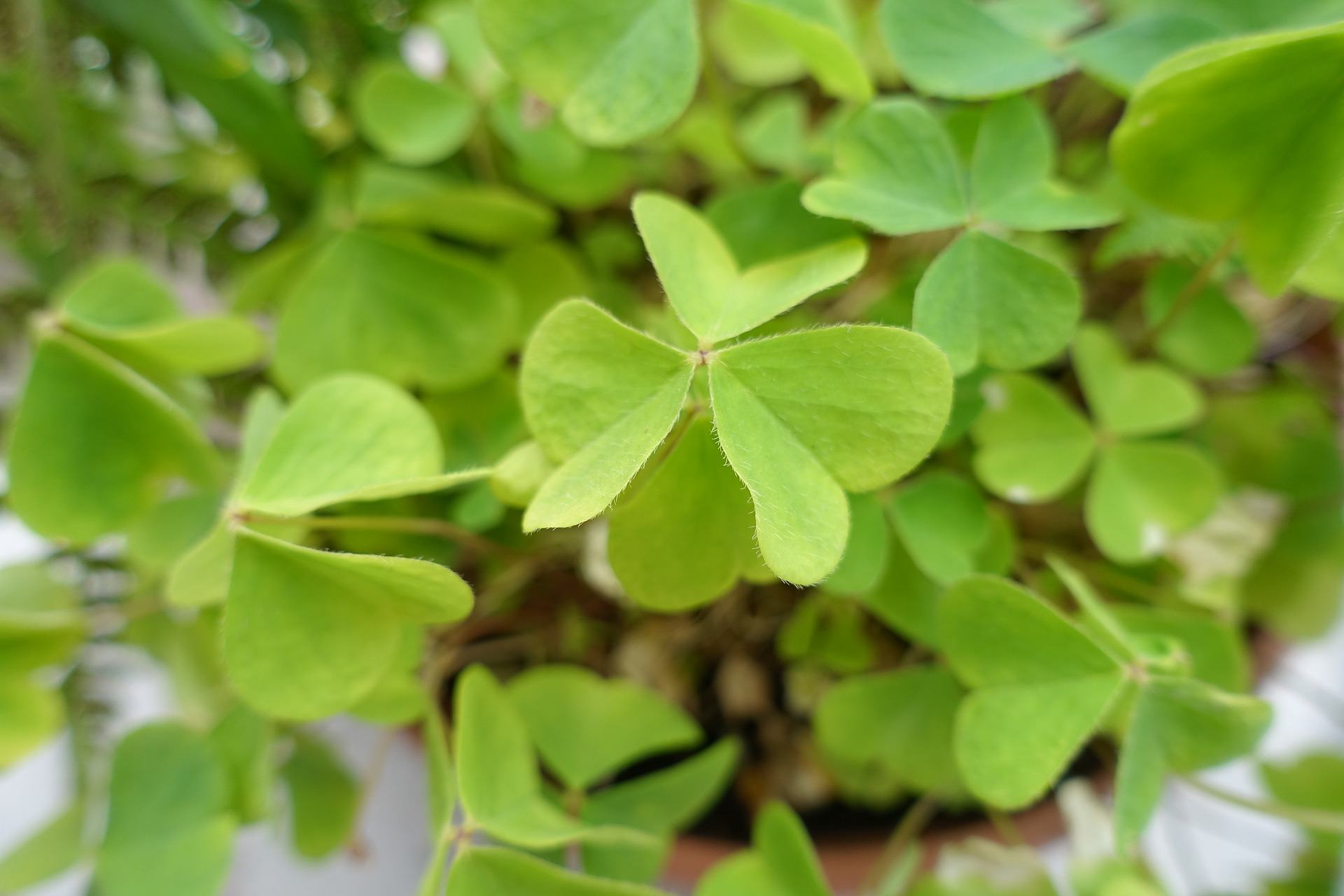
Wood sorrel is super easy to identify. It’s a little shamrock! The wood sorrel we have produces little yellow flowers and has a lemony taste. My favorite part are the little seed pods. They look like teeny tiny okra and taste like lemon candy.

Image by GK von Skoddeheimen from Pixabay
Wood sorrel is delicate, so it’s best to eat it fresh. Like many foraged plants, it’s high in oxalic acid, so don’t eat a lot and proceed with caution if you have any condition that would make oxalic acid especially dangerous.
Sunflowers
Did you know that you can eat more than just the sunflower seeds? The entire plant is edible! The leaves are eaten like spinach or brewed into tea. The petals and roots can be made into tea as well.

Flower buds can be cooked and eaten. I haven’t tried it yet, but I read they taste similar to artichokes. Apparently the stems taste like celery, and make a tasty snack. In addition to tea, the roots can be steamed, roasted or eaten raw.
Sunflowers are high in vitamins, minerals and antioxidants. Sunflower leaves are thought to help with inflammation when applied topically as a poultice or drank as a tea. The tea is also supposed to be good for sore throats.
Want to learn about more wild edibles?
I started with the most common and easily identifiable plants, but there’s so many more I can share just from my own yard. Let me know if you want to learn more or share your own experiences in the comments below.
Like this post? To make sure you never miss a future post, please sign up for my newsletter.

Shop Sale!
All items in my shop are 15% off until Friday, July 16, so please, check it out. Here’s just a few of the things you’ll find.
-
Product on sale
 Yoga Journal PDF Printable or DigitalOriginal price was: $5.00.$0.99Current price is: $0.99.
 -
Product on sale
 Upcycled Ouija Board Spirit Box with Purple Velvet Lining & Handmade PlanchetteOriginal price was: $80.00.$45.00Current price is: $45.00.
 -
Product on sale
 Fitness Exercise Diet Journal Planner PDF Printable or DigitalOriginal price was: $5.00.$0.99Current price is: $0.99.
 -
Product on sale
 Reading Planner PDF Printable or DigitalOriginal price was: $5.00.$0.99Current price is: $0.99.
 -
Product on sale
 Meal Planner PDF Printable or Digital UseOriginal price was: $5.00.$0.99Current price is: $0.99.
 -
Product on sale
 14 Printable PDF and PNG Literary Terms Posters for Classroom DisplayOriginal price was: $5.00.$0.99Current price is: $0.99.
 -
Product on sale
 Black Western Cowboy Boots Coffee Cup Cozy with Hook and Loop ClosureOriginal price was: $6.00.$3.00Current price is: $3.00.
 -
Product on sale
 Purple and Yellow Chevron Striped Coffee Cup Cozy with Hook and Loop ClosureOriginal price was: $6.00.$3.00Current price is: $3.00.
 -
Product on sale
 Red and White Striped Coffee Cup Cozy with Hook and Loop ClosureOriginal price was: $6.00.$3.00Current price is: $3.00.